How to Bluff and Lie Like a Pro: Best Imposter Strategies
Being the imposter is one of the most thrilling roles in any social deduction game. Unlike crewmates, who simply need to survive and complete tasks, the imposter has to think fast, lie convincingly, and manipulate an entire group of players into trusting them. Mastering the art of bluffing isn’t about luck it’s a skill you can build with the right techniques, timing, and mindset.
In this guide, we’ll walk through everything you need to know to bluff and lie like a true pro, from beginner-friendly tricks to advanced psychological strategies used by top players. Test these bluffing tactics in a live round of the Imposter Game.
Why Bluffing Is the Imposter's Most Important Skill
If you can’t bluff convincingly, no strategy in the world will save you. Bluffing is the foundation of every successful imposter round, because it’s what allows you to survive discussions, avoid votes, and manipulate the crew’s perception of reality. Your bluff is only as good as the word, so start with the best words for Imposter Game.
How Bluffing Changes the Outcome of a Round
A well-timed bluff can completely flip a round in your favor. Even if you’ve been caught near a body or seen acting suspiciously, a confident and believable explanation can shift suspicion away from you and onto someone else. The best imposters understand that the truth of what happened matters far less than what the group believes happened.
The Psychology Behind a Good Lie
Good lies work because they exploit how people naturally process information. Players tend to trust confident, simple explanations over confused or overly detailed ones. When you understand that people are looking for a story that “feels right” rather than one that’s perfectly logical, you can craft bluffs that sound completely natural, even under pressure.
Before the Round: Setting Up Your Bluff
The best bluffs aren’t created in the moment they’re set up early, before suspicion even begins.
Learn the Map and Common Task Routes
Knowing exactly where common tasks are located, how long they take, and which routes crewmates typically use gives you the raw material for believable alibis. If you know what a real crewmate’s movement pattern looks like, you can mimic it convincingly when questioned.
Watch Crewmate Behavior Early On
Pay close attention to where players go and what they’re doing in the first few minutes. This information becomes incredibly valuable later, letting you reference real locations and real players in your story, which makes your bluff far more convincing than a vague, made-up excuse.
Core Bluffing Techniques Every Imposter Should Know
These foundational techniques form the backbone of almost every successful imposter strategy.
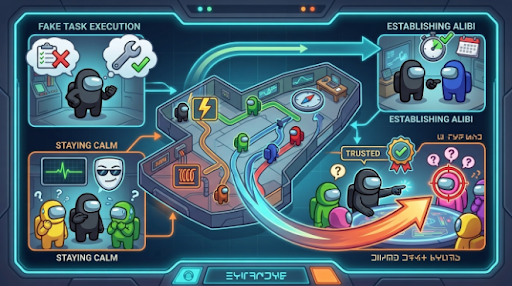
The Fake Task Bluff
Pretending to complete a task while secretly doing nothing (or eliminating a player) is one of the oldest tricks in the book. The key is to stand at the task location just long enough to appear legitimate, and to reference the task naturally if anyone asks what you were doing.
The Confident Accusation
Sometimes the best defense is a strong offense. Confidently accusing another player especially one who’s already acting nervous or inconsistent can redirect the group’s attention away from you entirely, even if your evidence is thin.
The "I Saw Someone" Trick
Claiming you saw another player near the scene, even if you didn’t, is a powerful way to plant doubt. This works best when you name someone who was genuinely nearby, since it’s harder to disprove and feels more credible to the group.
Playing the Victim
Framing yourself as someone who was also nearly killed, or who “just barely escaped,” can generate sympathy and trust. Crewmates are less likely to suspect someone who appears to have been a target themselves.
How to Lie Convincingly During Discussions
Discussions are where bluffs are tested the most, so how you communicate matters just as much as what you say.

Keep Your Story Simple and Consistent
The simpler your story, the fewer details you have to remember and defend. Overcomplicated lies tend to fall apart under questioning because it’s easy to contradict yourself. Stick to one clear, consistent version of events every time you’re asked.
Match Your Tone to Genuine Crewmates
Pay attention to how honest players typically speak during discussions their pacing, tone, and level of detail and try to mirror that energy. Sounding too rehearsed or too casual compared to everyone else can raise red flags.
Use Vague Details to Avoid Getting Caught
While specificity can make a lie sound more real, too much detail gives players more ammunition to catch you in a contradiction. Aim for just enough detail to sound credible without giving away information that could be checked or disproven.
Beginners can practise low-risk lying when they play the Imposter Game with hints online.
Reading the Room: Reacting to Suspicion
What to Do When Someone Accuses You
Stay calm, respond directly, and avoid getting defensive too quickly. Overreacting to an accusation often looks more suspicious than the accusation itself. Address the claim briefly, then pivot the conversation elsewhere.
Turning Suspicion Onto Someone Else
Redirecting attention is one of the most effective ways to survive an accusation. Point out inconsistencies in another player’s story, or bring up something suspicious you “noticed” earlier, to shift the group’s focus away from you.
Staying Calm Under Pressure
Nervous energy is one of the biggest giveaways in any bluffing game. Practicing a calm, measured tone even when you’re internally panicking makes a huge difference in how believable you come across. Prepare answers in advance using our list of guess the imposter game questions.
Advanced Imposter Strategies for Experienced Players
Once you’ve mastered the basics, these advanced tactics can take your bluffing to the next level.
Timing Your Kills Around Alibis
Skilled imposters time their eliminations around moments when they already have a believable alibi lined up, such as being seen entering a task area right before or after a kill occurs elsewhere.
Creating Fake Evidence
Referencing “vents you saw,” “suspicious movement,” or other fabricated details can create false leads that send the group chasing the wrong person. Use this sparingly, since overusing fake evidence can eventually be traced back to you.
Manipulating Group Voting Patterns
Experienced players learn to read the room during votes and time their input to influence the outcome whether that means staying quiet to avoid drawing attention, or speaking up at the right moment to swing votes toward someone else.
Common Bluffing Mistakes That Get Imposters Caught
Even experienced players fall into these traps. Avoiding them can dramatically improve your win rate.
Overexplaining Your Story
The more you explain, the more opportunities you create for contradictions. A concise, confident answer is almost always more convincing than a long, detailed justification.
Being Too Aggressive Too Early
Jumping straight to accusations before anyone has raised suspicion can make you look like you’re trying too hard to control the narrative, which often backfires.
Ignoring Body Language and Timing Cues
Failing to pay attention to how other players are reacting to you pauses, hesitation, or sudden silence can mean missing early signs that your bluff isn’t landing, leaving you unprepared when the questions get tougher.
Skilled groups should raise the difficulty with these hard Imposter Game words.
Tips for Bluffing in Different Game Situations
Not every round plays out the same way, so your bluffing approach should adapt to the situation.
Bluffing With Few Players Left
When only a handful of players remain, every accusation carries more weight. Focus on airtight, simple alibis and avoid unnecessary risks that could draw attention.
Bluffing When You're the Only Suspect
If all eyes are on you, lean into calm confidence rather than panic. Acknowledge the suspicion directly, offer your explanation once, and resist the urge to over-defend yourself repeatedly.
Bluffing as a Team of Two Imposters
When playing with a partner, coordinate your stories in advance if possible, and avoid backing each other up too obviously, since overly convenient alibis between two players can raise suspicion on their own.
Bluffing works differently when you can’t speak, as you’ll see in imposter drawing mode.
Frequently Asked Questions
What's the Easiest Bluff for Beginners?
The fake task bluff is one of the easiest strategies to start with, since it simply involves standing near a task location and referencing it naturally if questioned.
How Do I Stay Calm When Accused?
Practice responding to accusations with short, direct answers rather than long explanations. The calmer and more concise your response, the more believable it tends to sound.
Is It Better to Stay Quiet or Talk a Lot as Imposter?
It depends on the situation. Staying quiet works well when you’re not under suspicion, but speaking up with useful-sounding observations can help redirect attention when the group starts looking your way.
Final Thoughts
Bluffing well as an imposter isn’t about telling the biggest lie it’s about telling the most believable one. By studying crewmate behavior, keeping your stories simple, staying calm under pressure, and knowing when to go on the offensive, you can consistently outsmart even the most suspicious groups. Like any skill, effective bluffing takes practice, but with the strategies in this guide, you’ll be well on your way to becoming the kind of imposter everyone underestimates until it’s too late. Keep the mood light between rounds with some funny words for Imposter Game.